

The materials available in this section provide an example of a breakdown of learning units for geography for mixed-aged classes, which are Years 1 and 2, Years 3 and 4, and Years 5 and 6.
The sequence of learning, which takes full account of the National Curriculum, includes adaptations to accommodate mixed-aged classes.
The units of learning assume two units of geography coverage each year, but the choices provided enable you to take your own route.
There is a balance between substantive and disciplinary knowledge covered in each unit. To ensure full coverage, there are suggestions set out on the pages preceding the cycles.
Immediately following the overview of coverage, there is a long-term overview of the composite learning and components for each learning unit. For all, a full scheme is available.
Where applicable, a text linking to the geography unit is recommended. However, the text should become the focus of the English teaching and could run in parallel to the geography unit. It is important to note that the text is chosen for its quality, not just because it links with the geography being taught.
Similarly, some units offer a link to art or design and technology, provided because the skills being taught in art or DT are appropriate for the age group and are not solely because of the geography content.
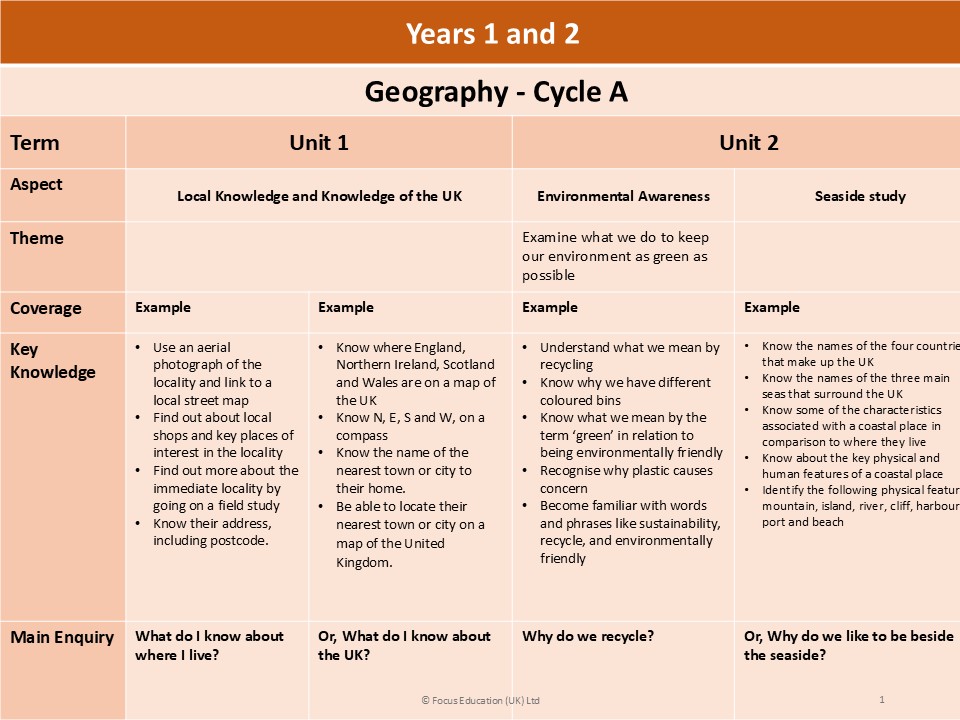
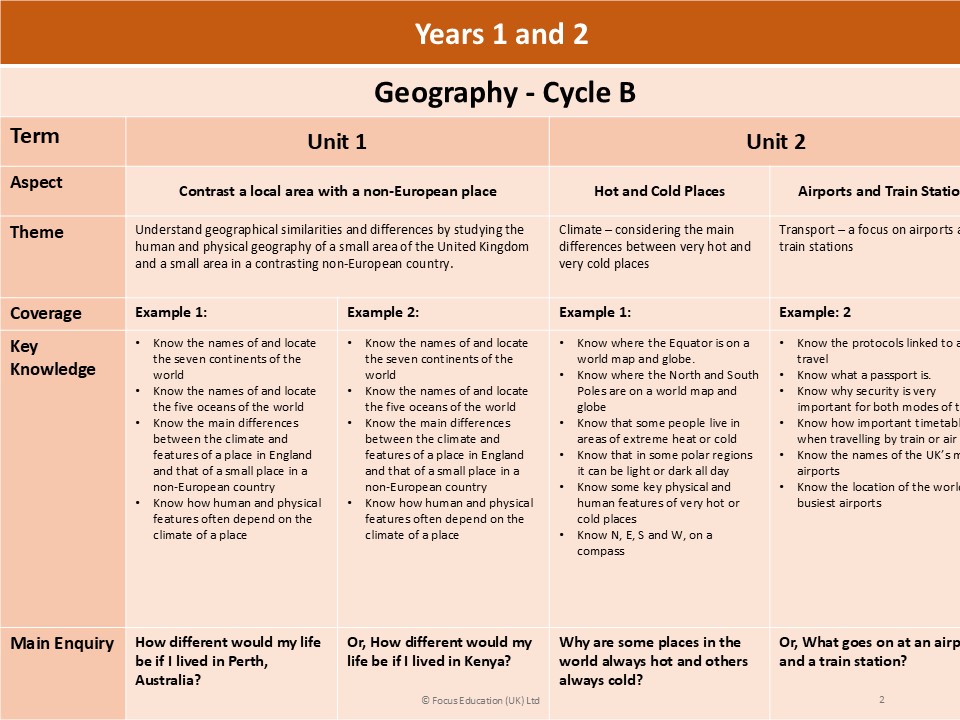
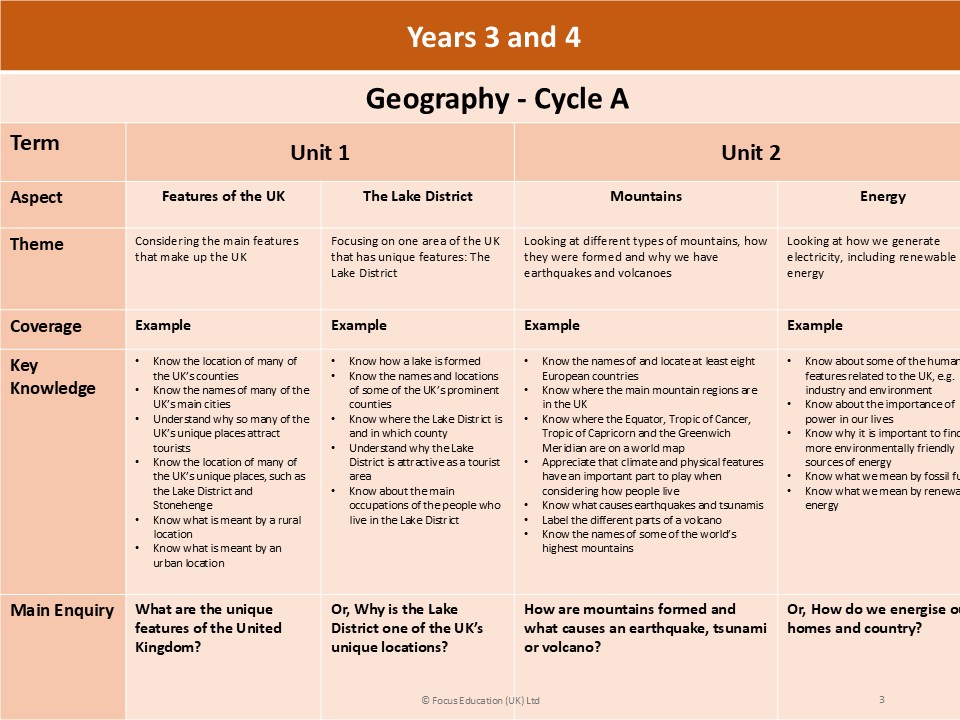
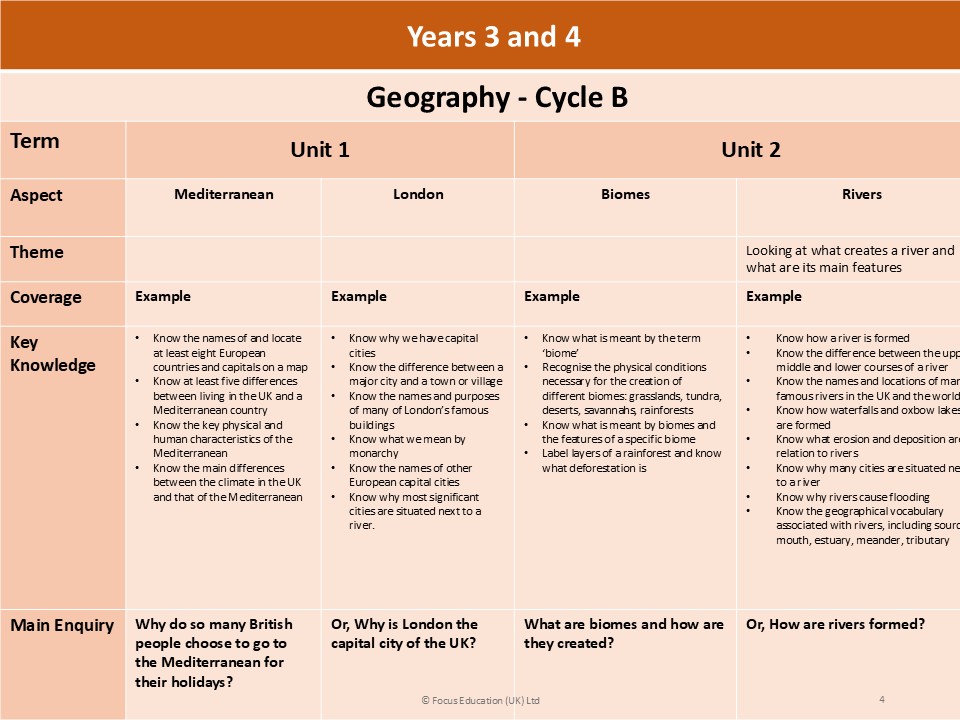
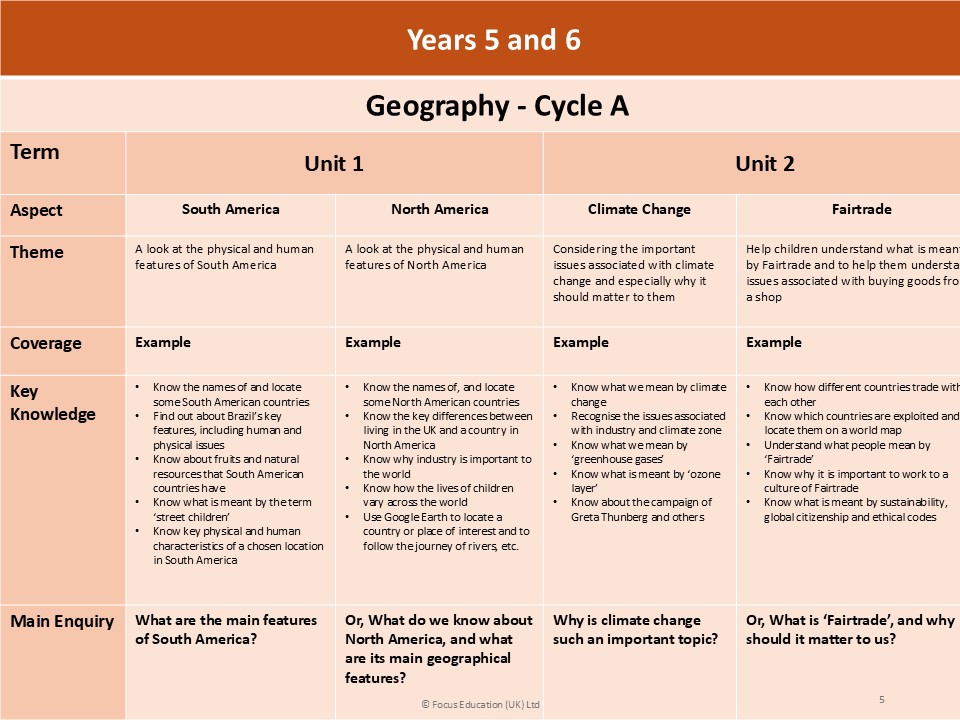
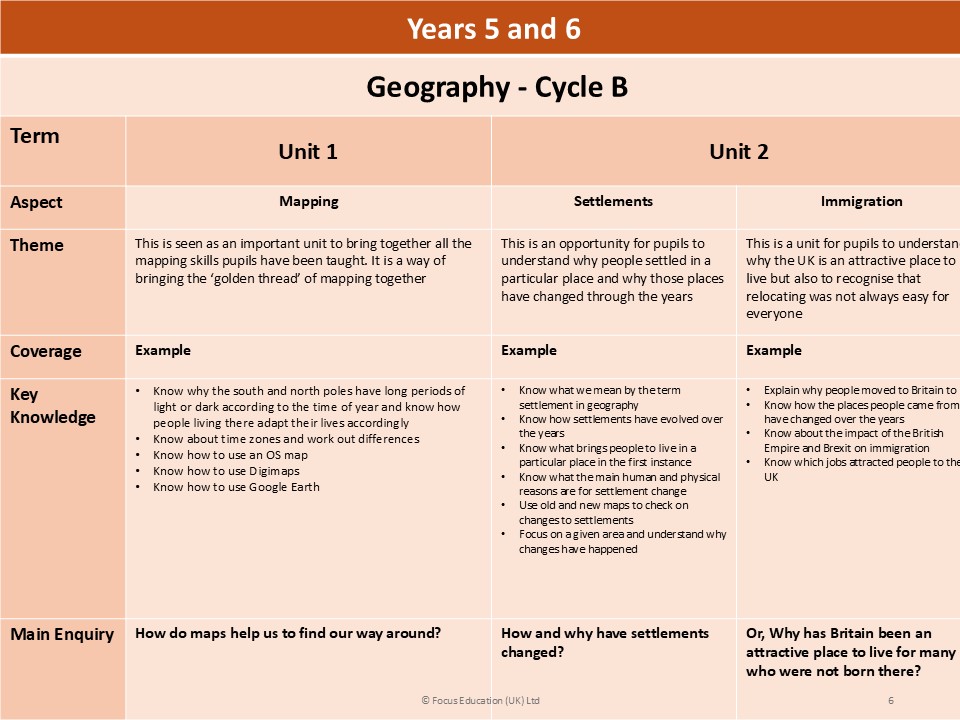
Links to see the units…
GEOGRAPHY OVERVIEW – RECEPTION CHILDREN (WORKING WITH YEARS 1 AND 2)
GEOGRAPHY OVERVIEW YEAR 1 AND 2
GEOGRAPHY OVERVIEW YEAR 3 AND 4
GEOGRAPHY OVERVIEW YEAR 5 AND 6
Geography Vocabulary Overview
Developing children’s vocabulary is a crucial aspect of teaching and learning. An understanding of language opens doors for young minds that they didn’t know existed, enabling them to build the cultural capital necessary to succeed and fulfil their potential.
In geography, it is vital that we expose children across the whole of the Primary age range to key vocabulary necessary for development in this subject area. They need to experience the challenging technical language that will help them articulate their understanding more clearly, concisely, and effectively.
Children need to develop their awareness of key vocabulary and concepts when learning about different geographical locations and the difference between physical and human geography and apply this learning to other aspects of geography they will study. Understanding key geographical language allows them to ask perceptive questions and develop their knowledge of the substantive concepts which are part of the curriculum.
This vocabulary overview bears all of this in mind and is in two sections. The first links directly to the geography units of learning delivered by the Learning Challenge Curriculum so that teachers and children know exactly the language required for success. For each year group, there is a set of six keywords for each topic. These six keywords, with definitions, are on the knowledge organisers (available separately) for each unit of learning. Alongside the six keywords, is further language children could meet as part of the unit of learning, when and where appropriate. The second section looks at more specific language and vocabulary, and the words children should experience over the course of the year, split up into ‘Locational knowledge’, ‘Place knowledge (human and physical)’, and ‘Geographical skills and fieldwork’ to enable development across different aspects of geography.
The overview is perfect for helping teachers understand and see progression over the year. It makes it easy to see the vocabulary met in previous years, and how their teaching fits in with the rest of the school. For subject leaders, it sets out the required vocabulary for development year by year.
Geography Vocabulary Overview – All Year Groups (mixed-age) Geography Disciplinary Knowledge for ChildrenIf you are not a Subscriber, you can purchase these units through our website.
You can purchase them as key stage or whole school bundles of units or as individual units or resources from each unit
You can also purchase many of the other resources such as the Geography Mixed-age Vocabulary Overview
